



Venice Days sports Eurocentric profile
Eleven feature films, eleven “declinations of arthouse cinema,” to be held from Venice Days (August 28-September 6), promoted by ANAC and API within the Venice Film Festival.
For its fifth edition – directed for the third time by Delegate General Fabio Ferzetti – the sidebar continues to ask questions of contemporary cinema: “Is there still room for a “different” kind of cinema? What margins remain for those who work outside the rules of the market? How to reconcile the sacred need to communicate with audiences without surrendering to the homologation of tastes and language?”
The profile is this year more than ever “distinctly Eurocentric,” says Ferzetti: “Stories of flight, growth and transformation behind which we can make out the anxieties of an increasingly more dissatisfied and problematic Europe”.
Thus, with the exception of Una semana solos by Argentina’s Celina Murga (on the Lido a second time after Ana y los otros, 2003), all of the section’s films come from Europe this year. Including Machan, which although shot in Sri Lanka with Singalese actors, is the directorial debut by Uberto Pasolini (producer of Full Monty) and was financed primarily with Italian and German funds.
There are four other debut directors – and all five are vying for the Leon of the Future Luigi De Laurentiis Award – among them, Sallie Aprahamian, an award-winning British theatre and television actress who adapted a story written by lead actors Doraly Rosa and Dan Fredenburgh to make Broken Lines. A similar collaboration also took place with the no-budget Un altro pianeta by Stefano Tummolini, co-written with his lead actor Antonio Merone and set among the dunes of the nude beaches of Capocotta, near Rome.
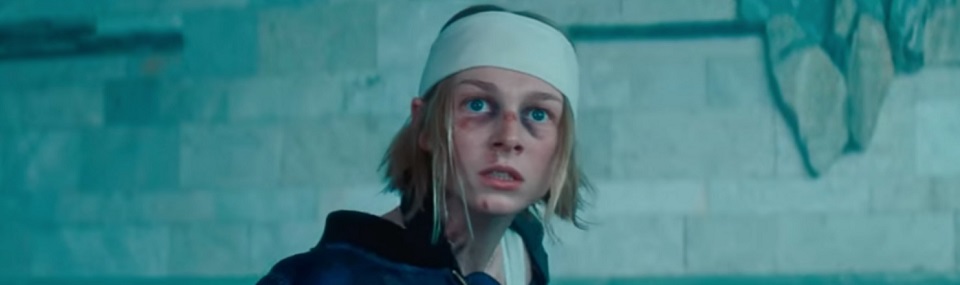
Finnish debut director Jukka-Pekka Valkeapää has made The Visitor, the most disturbing and visionary title of the selection, which owes much to Tarkovsky; and Hooked, an extravagant philosophical comedy from Romania’s Adrian Sitaru, who has learned much from the works of Ionesco.
There are numerous films from Eastern Europe: from Slovenia, the Hitchcockian Landscape No. 2, the second film by the prolific novelist Vinko Moderndorfer, while Poland offers Scratch by Michal Rosa, at the edge between Bergmanian drama and a variation on the theme of The Lives of Others [+see also:
film review
trailer
interview: Florian Henckel von Donners…
interview: Ulrich Muehe
film profile]. The Czech Republic is present with A Country Teacher by Bohdan Sláma, a delicate story of homosexuality starring Pavel Liska (also in The Visitor).
Flemish Belgium offers the section black humour with Patrice Toye’s Nowhere Man, a story on human frailty loosely based on Pirandello’s The Late Mattia Pascal. From France comes Sylvie Verheyde’s Stella, a female (and highly autobiographical) version of 400 Blows of Paris of the 1970s.
The programme is rounded out by two documentaries: Che saccio by Camille d’Arcimoles, an intimate diary that in under 50 minutes looks at five years in the lives of the very young Francesco Casisa and Filippo Pucillo, who appeared in Emanuele Crialese’s films; and Il Passato è il mio bastone by Flavia Mastrella and Antonio Rezza, an example of self-analysis in the form of a film, as well as an affectionate sneer at film critics who have been following their work since the very beginning.
There are also numerous discussions, parallel events and screenings (of note is Silvio Soldini’s documentary Un Paese possibile) that will be held in the section’s headquarters, the Filmmakers Villa. As always, the non-competitive section will assign the traditional Label Europa Cinemas to one film, guaranteeing the winner promotion and distribution on 1710 participating screens and five prints to be made for Italy by Technicolor.
(Translated from Italian)
Did you enjoy reading this article? Please subscribe to our newsletter to receive more stories like this directly in your inbox.